


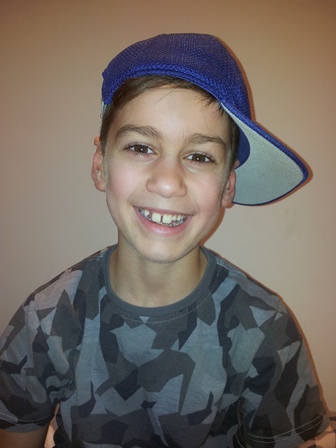
 Zachary Addison Athlete Of The Month Interview. Listen to Zachary talk about being happy, helpful and brave; being a dog and “Tidy your room!”. (Approx. 5 minutes).
SJAC – Athlete Of The Month For December.
SJAC – Athlete Of The Month For November.
 Caleb Moreton Athlete Of The Month Interview. Listen to Caleb talk about being fast, friendly and happy; his supportive family and “Doing stuff better”. (Approx. 6 minutes).
SJAC – Spelthorne – Athlete Of The Month For September.
 Rhea Falleiro Athlete Of The Month Interview. Listen to Rhea talk about being sporty, fun and clever; her cute dog and “Tell me the truth”. (Approx. 5 minutes).
SJAC – Spelthorne – Athlete Of The Month For June
 Lily Hyman Athlete Of The Month Interview. Listen to Lily talk about being fun, happy and helpful; cuddling Sidney and “The Ladder”. (Approx. 6 minutes).
What if…?
Our Learners
What if our learners set their own challenges and design their own games and tasks to meet those challenges?
What if our learners have opportunities to lead and make decisions?
What if our learners work cooperatively in groups and contributed to each other’s learning?
What if our learners are given time to reflect on their practice and performance, draw conclusions and progress in their own way?
What if our learners take the opportunity to progress at their own pace?
What if our learners work things out for themselves?
What if the tasks our learners practice, make sense and seem relevant to their development?
What if all this happens at once?
What if all this happens all the time?
The Coach
What if the coach plans for this to happen?
What if the coach organises things so this happens?
What if the coach observes and does just enough to facilitate and accelerate learning whilst all this is happening?
Who’s driving the car? Who’s building the road?
Two Conversations
Two Conversations
I was talking with my mother-in-law, trying to get a point across about coaching when suddenly she interrupted me, “Do you know what I am hearing? Blahdy, blahdy, blah.” She laughed…lots… and wandered off.
It was funny, but also reminded me about what we could term, ‘Two Conversations’. One of the conversations is the conversation the coach wants to have with their learner. The other conversation is the conversation the learner is already having inside their own head.
The problem with ‘Two Conversations’ is that often they are different.
An example of this might be the coach wanting to talk about technique whilst the athlete is thinking about and wanting to talk about performance.
Our coach might say, “Try to get your knee to this position”. Here the coach’s focus is on technique. Our athlete might already be thinking, “That throw wasn’t as far as last time”. Here the athlete’s focus is on performance. Two conflicting conversations – interference.
Effective coaching is often about minimising interference.
Performance = Potential – Interference.
(Tim Gallwey – http://theinnergame.com/)
‘Two Conversations’ is interference.
If we want to help our learner maximise their learning we as coaches need to help minimise interference, we need to have ‘One Conversation’ -the conversation that our learner is already having.
Learning – it’s a process.
I think. I think a lot.
The problem with thinking a lot is that thinking is only part of the learning process.
KOLB: Experiential Learning Model, (http://en.wikipedia.org/wiki/Experiential_learning).
According to KOLB, there are four stages to learning from experience and these are:
Concrete Experience (Feeling)
Reflective Observation (Watching)
Abstract Conceptualisation (Thinking)
Active Experimentation (Doing)
If our learners are predominantly ‘thinking’ and doing relatively less ‘feeling’, ‘watching’ or ‘doing’, then our learners may not be maximising their learning from experience.
The learning situation: Practicing shot put.
Concrete Experience (Feeling)
Whilst practicing our aim as learners at this stage is to gather as much information as possible. We are trying to be mindful of the learning situation asking ourselves questions like:
What am I noticing?
What am I seeing?
What am I hearing?
What am I feeling?
What is happening?
What is happening to my balance as I release the shot?
We are trying to notice what we are noticing.
Reflective Observation (Watching)
Whilst pausing from practice or after our practice has finished our aim as learners at this stage is to be clear and detailed about what we have just experienced. At this stage we are asking ourselves:
What did I notice?
What did I see?
What did I hear?
What is the ‘stand-out’ information here?
What did I feel?
We are trying to notice what we noticed.
“I noticed that mostly my balance fell away to the left and forwards as I released the shot.”
Abstract Conceptualisation (Thinking)
Once we have gathered our information and noticed what we have noticed, our aim as learners at this stage is to try to generate a theory or come to a conclusion: “My balance is falling away because…” We are trying to make sense of the information available. We are asking ourselves:
What does this mean?
What is the cause of this?
What do I already know that helps me make sense of this information?
Active Experimentation
So now that we have our conclusions, at this stage as learners, we are now planning, goal setting, testing and trying to apply our theories in our next experience. We are asking ourselves, “Is my theory correct – let’s see?”
As coaches we can help our learners learn through their experiences by asking our learners the right questions at the right time to facilitate ‘feeling’, ‘watching’, ‘thinking’ or ‘doing’.
We need to help our learners who ‘think’ a lot to ‘feel’, ‘watch’ and ‘do’ more. It’s a process.
SJAC – Spelthorne – Athlete Of The Month For March
 Jamie Haxton Smith Athlete Of The Month Interview. Listen to Jamie talk about being fast, sporty and fit; Eden Hazard and The Early Bird Catches The Worm. (Approx. 6 minutes).
SJAC – Spelthorne – Athlete Of The Month For February
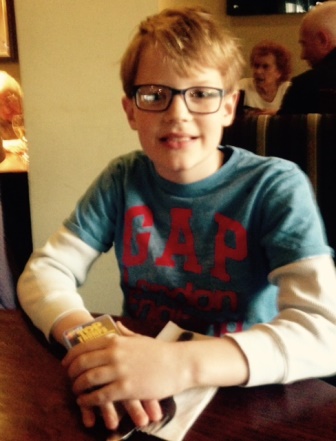 Piers Marchant Athlete Of The Month Interview. Listen to Piers talk about being funny, intellegent and dependable; Olly Murs and Kings and Queens. (Approx. 6 minutes).
European Masters Indoor Athletics Championships.
Well done to Helen & Stuart, who competed in the European Masters Indoor Athletics Championships.
Date: 23rd – 28th March 2015.
Venue: Poland.
Helen’s Performances:
Long Jump – 2nd, 5.32m
200m – 6th in final, 27.17s (26.72s heat)
4×200m – 2nd.
Stuart’s Performances:
60m – semi-final, 7.35s
200m – 4th Heat, 24.29s
Long Jump – 6th, 5.50m
All Results: http://www.emacitorun2015.com/en/home.html


